
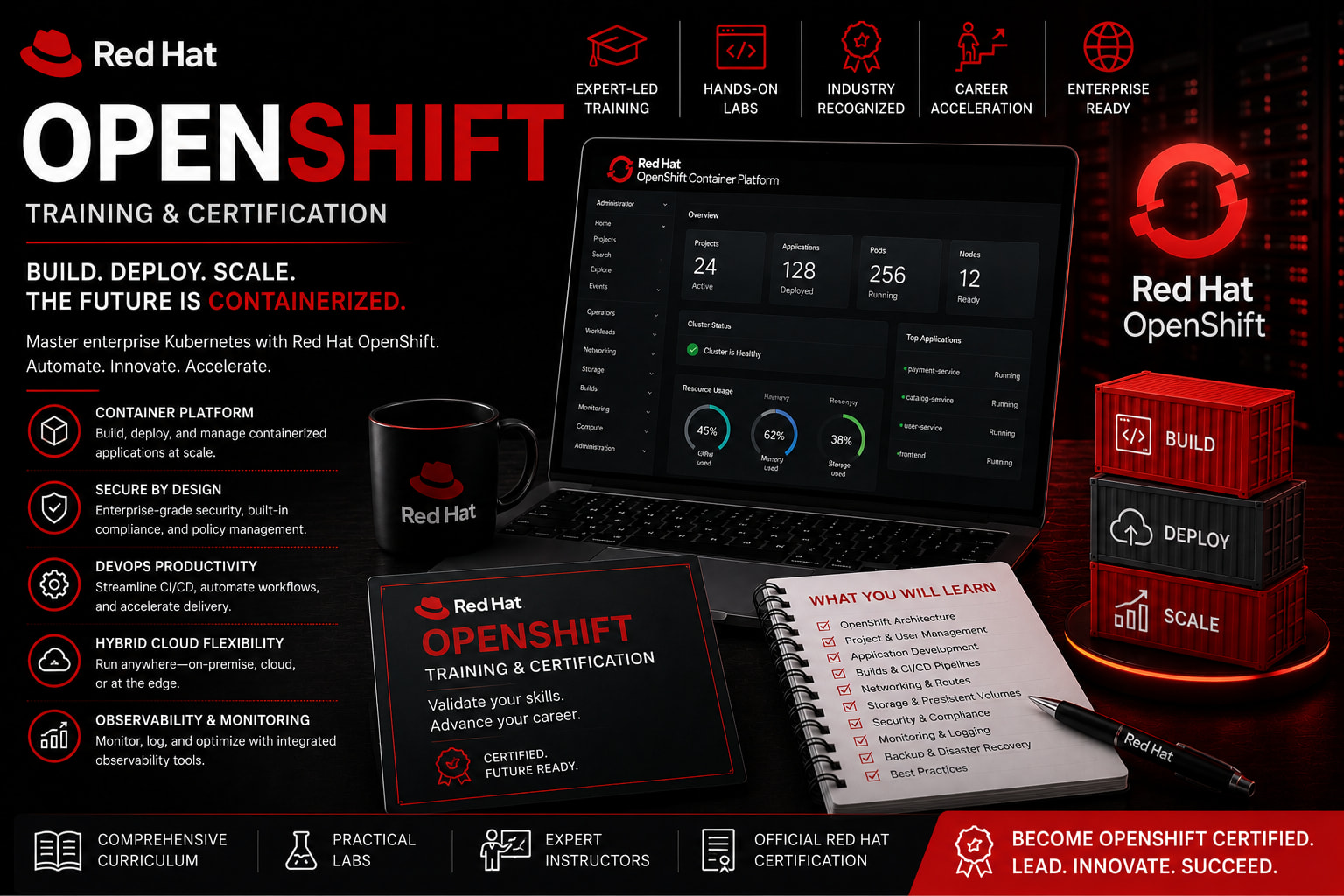
Red Hat OpenShift Training & Certification | Enterprise Kubernetes & Container Platform Program
Master enterprise containerization and Kubernetes with our Red Hat OpenShift Training & Certification program. Learn OpenShift architecture, Kubernetes administration, container deployment, application orchestration, DevOps automation, CI/CD pipelines, networking, storage, and security through hands-on labs and real-world enterprise cloud scenarios.
Instructor
Babli Kumari
cyberkavach2026@gmail.com
Course Description
Red Hat OpenShift Course Overview
The Red Hat OpenShift Training & Certification program is an advanced cloud-native training course designed for IT professionals, DevOps engineers, cloud administrators, and developers who want to deploy, manage, and automate containerized applications using Red Hat OpenShift. This course provides comprehensive knowledge of enterprise Kubernetes, container orchestration, application deployment, networking, storage, security, and DevOps workflows within modern cloud environments.
As organizations continue adopting Kubernetes and cloud-native technologies, OpenShift has become one of the leading enterprise container platforms. This course emphasizes practical implementation through hands-on labs, enabling learners to build, deploy, scale, secure, and monitor containerized workloads while following industry best practices.
What We Offer in This Course
- Comprehensive understanding of Red Hat OpenShift architecture.
- Hands-on Kubernetes and container management labs.
- Enterprise application deployment and orchestration.
- Container networking and persistent storage configuration.
- CI/CD pipeline implementation using OpenShift.
- Security and access management best practices.
- Cluster administration and monitoring.
- Application scaling and high availability techniques.
- Guidance from experienced cloud-native professionals.
- Preparation for Red Hat OpenShift certification exams.
Course Objectives
- Understand OpenShift architecture and Kubernetes fundamentals.
- Deploy and manage containerized applications.
- Configure OpenShift clusters and namespaces.
- Manage networking, storage, and routing.
- Implement secure access control and authentication.
- Automate deployments using CI/CD pipelines.
- Monitor, troubleshoot, and optimize OpenShift environments.
- Build enterprise-ready cloud-native applications.
Topics Covered During the Training
Introduction to OpenShift
- Cloud-native computing fundamentals.
- OpenShift architecture.
- Kubernetes concepts.
- Container ecosystem overview.
- Enterprise application platform.
Container Fundamentals
- Containers and container images.
- Container lifecycle management.
- Image registries.
- Podman fundamentals.
- Image management best practices.
OpenShift Cluster Administration
- Cluster installation concepts.
- Projects and namespaces.
- Node management.
- Resource quotas.
- Cluster maintenance.
Application Deployment
- Deploying applications.
- Deployment strategies.
- Rolling updates.
- Scaling applications.
- Rollback procedures.
Networking and Routing
- Services and routes.
- Ingress controllers.
- DNS configuration.
- Load balancing.
- Network policies.
Storage Management
- Persistent volumes.
- Persistent volume claims.
- Storage classes.
- Dynamic provisioning.
- Stateful applications.
Security and Access Management
- Authentication and authorization.
- Role-based access control (RBAC).
- Secrets and ConfigMaps.
- Security Context Constraints (SCC).
- Application security best practices.
CI/CD and DevOps Integration
- BuildConfig and ImageStreams.
- OpenShift Pipelines.
- Git integration.
- Continuous Integration.
- Continuous Deployment.
Monitoring and Troubleshooting
- Cluster monitoring.
- Logging.
- Performance tuning.
- Resource optimization.
- Application troubleshooting.
High Availability and Best Practices
- High availability architecture.
- Disaster recovery concepts.
- Backup strategies.
- Cluster scalability.
- Enterprise deployment best practices.
Hands-On Practical Exposure
- Deploying and managing OpenShift clusters.
- Creating and managing Kubernetes workloads.
- Building and deploying containerized applications.
- Configuring networking and persistent storage.
- Implementing CI/CD pipelines.
- Managing users, permissions, and security policies.
- Troubleshooting enterprise OpenShift environments.
Tools and Technologies Covered
- Red Hat OpenShift.
- Kubernetes.
- Podman.
- CRI-O.
- OpenShift Pipelines (Tekton).
- Helm.
- Git.
- Persistent Volumes.
- Prometheus.
- Grafana.
Who Should Enroll
- DevOps Engineers.
- Cloud Engineers.
- Platform Engineers.
- Linux System Administrators.
- Kubernetes Administrators.
- Site Reliability Engineers (SREs).
- Application Developers.
- Cloud Architects.
Career Opportunities After Completion
- OpenShift Administrator.
- Kubernetes Administrator.
- DevOps Engineer.
- Platform Engineer.
- Cloud Engineer.
- Site Reliability Engineer (SRE).
- Cloud Infrastructure Engineer.
- Container Platform Engineer.
Certification Preparation
- Complete coverage of Red Hat OpenShift certification objectives.
- Extensive hands-on Kubernetes and OpenShift labs.
- Enterprise deployment and administration scenarios.
- Practice assessments and revision sessions.
- Expert guidance for Red Hat OpenShift certification exams.
By the end of this program, participants will have the practical skills to deploy, administer, secure, monitor, and troubleshoot enterprise Kubernetes environments using Red Hat OpenShift. They will be well prepared to manage cloud-native applications in production environments and pursue Red Hat OpenShift certification with confidence.
Course Price
Inclusive of all taxes
This course includes:
- Full lifetime access
- Certificate of completion
- Self-paced learning
- Expert instructor