
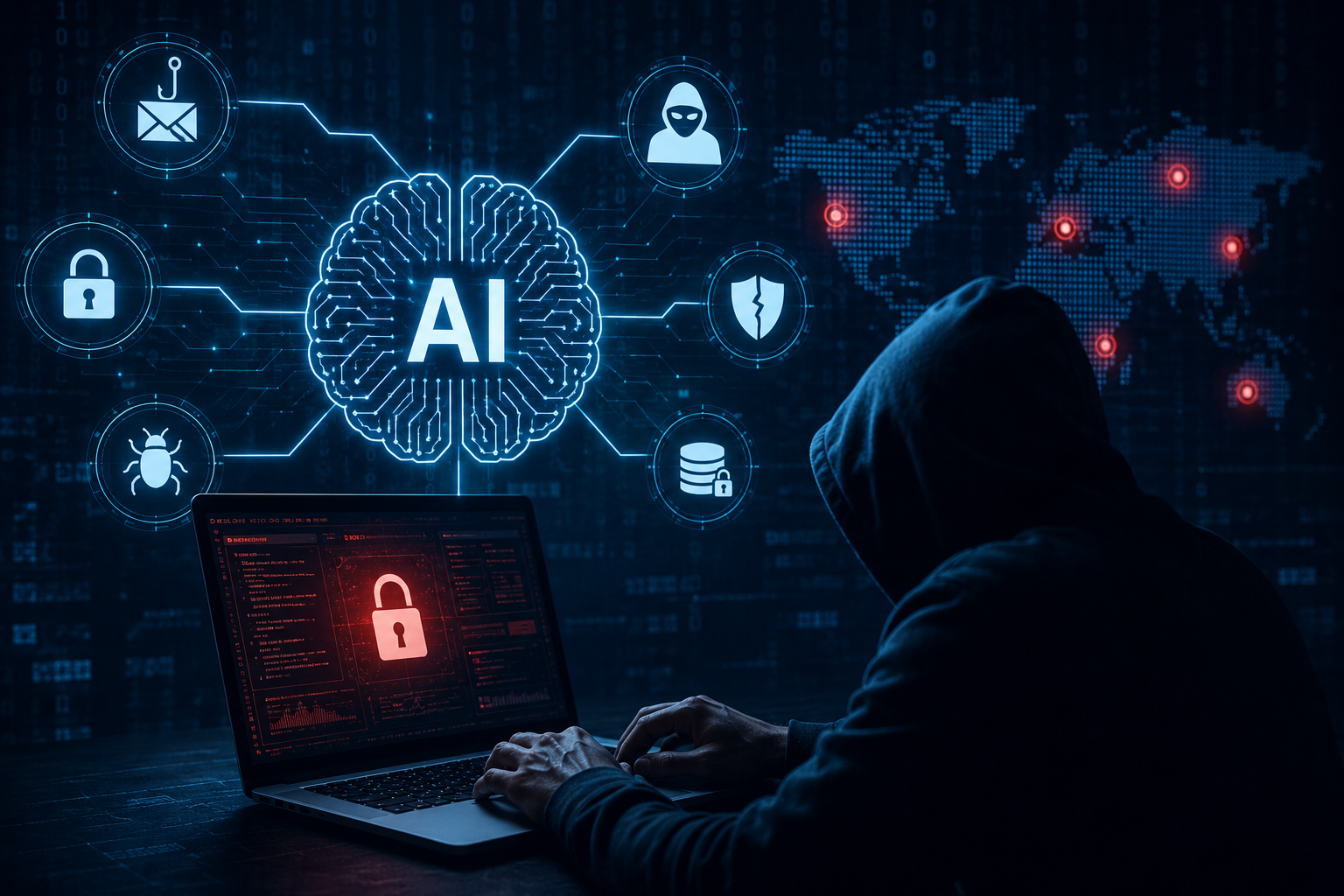
AI-Powered Cyber Attacks
Artificial Intelligence (AI) has become one of the most revolutionary technologies of the modern era. It is transforming industries, improving productivity, and making everyday life more convenient. From virtual assistants and recommendation systems to healthcare and autonomous vehicles, AI has brought numerous benefits to society. However, like every powerful technology, artificial intelligence can also be misused. Cybercriminals are increasingly adopting AI to launch sophisticated cyber attacks that are faster, smarter, and more difficult to detect. These AI-powered cyber attacks are creating new challenges for individuals, organizations, and governments around the world.
Traditional cyber attacks often rely on manual techniques and predefined scripts. In contrast, AI-powered attacks use machine learning algorithms, automation, and intelligent systems to analyze targets, adapt to security measures, and execute attacks with greater precision. Attackers can now automate various stages of an attack, including reconnaissance, phishing, malware deployment, password cracking, and data theft. As AI technology continues to evolve, cyber threats are becoming more dangerous and complex than ever before.
Understanding AI-Powered Cyber Attacks
AI-powered cyber attacks refer to malicious activities that utilize artificial intelligence and machine learning techniques to improve the efficiency and effectiveness of cyber attacks. Instead of relying solely on human intervention, attackers can train AI systems to identify vulnerabilities, imitate human behavior, generate convincing fake content, and adapt attack methods according to the responses of security systems.
Artificial intelligence enables attackers to process enormous amounts of data in a short period. This capability allows them to identify weak points in networks, applications, and user behavior more efficiently. AI systems can also learn from previous attacks and continuously improve their strategies, making them more successful over time.
The integration of AI into cybercrime has changed the threat landscape significantly. Attacks that once required extensive technical expertise can now be automated and executed with minimal human effort. This has lowered the barriers for cybercriminals and increased the scale of cyber threats worldwide.
Why Cybercriminals Use Artificial Intelligence
Cybercriminals are attracted to artificial intelligence because it provides several advantages. AI systems can automate repetitive tasks, process large volumes of information, and make intelligent decisions based on available data. These capabilities enable attackers to launch more targeted and efficient attacks while reducing the amount of time and effort required.
Another reason is adaptability. Traditional malware follows predefined instructions, but AI-powered malware can modify its behavior to avoid detection. It can learn from the environment, recognize security mechanisms, and adjust its attack techniques accordingly. This makes AI-driven threats much harder to identify and stop.
Artificial intelligence also allows attackers to personalize attacks. By analyzing social media profiles, emails, and publicly available information, AI systems can generate highly convincing phishing messages tailored to specific individuals. Personalized attacks have a much higher success rate because victims are more likely to trust familiar content.
AI-Driven Phishing Attacks
Phishing has long been one of the most common cyber threats. Traditionally, phishing emails contained spelling mistakes and suspicious language, making them easier to recognize. However, artificial intelligence has transformed phishing attacks into highly sophisticated operations.
AI systems can analyze writing styles, communication patterns, and personal information to create realistic emails and messages. These messages often appear to come from trusted organizations, colleagues, or family members. Since they are personalized and grammatically accurate, victims find them much harder to distinguish from legitimate communications.
Machine learning algorithms can also identify the most effective words, subject lines, and communication techniques to maximize success rates. Attackers can automatically generate thousands of customized phishing emails, increasing the probability of deceiving their targets.
In addition to emails, AI-powered phishing attacks can occur through social media platforms, messaging applications, and fake websites. Some attackers even use chatbots to engage victims in realistic conversations and manipulate them into revealing sensitive information.
Deepfake Technology and Social Engineering
Deepfake technology represents another dangerous application of artificial intelligence in cybercrime. Deepfakes use AI algorithms to create realistic images, videos, and audio recordings that imitate real individuals. These fake media files are often so convincing that people find it difficult to distinguish them from genuine content.
Cybercriminals use deepfakes to impersonate executives, celebrities, or trusted individuals. For example, attackers may generate fake voice recordings that sound exactly like a company executive and instruct employees to transfer money or disclose confidential information. Such attacks exploit human trust and can result in severe financial losses.
Deepfake videos and audio recordings can also spread misinformation, damage reputations, and influence public opinion. As AI-generated media becomes increasingly realistic, verifying authenticity has become more challenging.
AI-Powered Malware
Malware is malicious software designed to disrupt systems, steal data, or gain unauthorized access to networks. Artificial intelligence has made malware more intelligent and adaptive. AI-powered malware can analyze its environment, evade security tools, and modify its behavior to remain undetected.
Unlike conventional malware, which follows fixed instructions, AI-driven malware can learn from previous experiences. It can determine which attack methods are successful and optimize its strategies accordingly. This capability makes AI-powered malware significantly more dangerous.
Some advanced malware variants can identify antivirus software and alter their code to bypass detection mechanisms. Others can remain dormant until specific conditions are met, making them difficult to discover during routine security scans.
AI-enabled malware can also spread automatically across networks by identifying vulnerable devices and exploiting weaknesses without human intervention. This ability allows attacks to propagate rapidly and affect a large number of systems.
Automated Password Cracking
Passwords remain one of the primary methods of protecting digital accounts. Unfortunately, many users still rely on weak and predictable passwords. Artificial intelligence has significantly improved password-cracking techniques, making traditional passwords more vulnerable.
Machine learning models can analyze common password patterns, user behavior, and previously leaked password databases to predict likely combinations. AI systems can generate password guesses more intelligently than traditional brute-force attacks, reducing the time required to crack passwords.
Attackers often combine AI with credential stuffing techniques, where stolen usernames and passwords are automatically tested across multiple platforms. Since many users reuse passwords across different services, these attacks can compromise numerous accounts quickly.
The increasing power of AI-based password attacks highlights the importance of strong passwords, password managers, and multi-factor authentication. These security measures provide additional layers of protection against unauthorized access.
AI in Ransomware Attacks
Ransomware attacks have become one of the most destructive forms of cybercrime. In these attacks, cybercriminals encrypt files or entire systems and demand payment in exchange for restoring access. Artificial intelligence has increased the capabilities of ransomware, making it more effective and difficult to stop.
AI-powered ransomware can automatically identify valuable files, prioritize targets, and spread across networks without requiring constant human control. Machine learning algorithms allow ransomware to adapt to different environments and avoid detection by traditional security tools.
Some advanced ransomware variants can analyze backup systems and disable them before encrypting files. This strategy prevents victims from restoring their data easily and increases the pressure to pay the ransom. AI also enables attackers to determine the most profitable targets by analyzing financial data and organizational structures.
AI-Based Network Attacks
Artificial intelligence is also being used to conduct network attacks more efficiently. AI algorithms can scan networks rapidly, identify vulnerabilities, and exploit weaknesses without human involvement. This automation significantly increases the speed and scale of attacks.
Attackers can use machine learning models to monitor network traffic and identify patterns that reveal security weaknesses. Once a vulnerability is discovered, AI systems can launch attacks automatically and adapt if defensive measures are encountered.
Distributed Denial of Service attacks have also evolved with AI technology. Intelligent systems can coordinate large numbers of infected devices and optimize attack traffic to overwhelm servers while avoiding detection. These AI-enhanced attacks can disrupt websites, online services, and critical infrastructure.
Data Theft and Information Gathering
Data is considered one of the most valuable assets in the digital world. Cybercriminals constantly seek ways to steal sensitive information such as passwords, financial records, medical data, and intellectual property. Artificial intelligence has made data theft operations more sophisticated and efficient.
AI systems can process massive amounts of information from websites, social media platforms, databases, and public records. This information is used to create detailed profiles of individuals and organizations. Attackers can use these profiles to launch targeted attacks and maximize their chances of success.
Machine learning algorithms can identify valuable information automatically and categorize stolen data according to its importance. This allows cybercriminals to prioritize high-value assets and sell sensitive information on illegal marketplaces.
The Role of Generative AI in Cybercrime
Generative AI has opened new possibilities for both innovation and cybercrime. These AI models can generate realistic text, images, videos, and code. While these capabilities provide numerous benefits, they also present significant risks when used maliciously.
Cybercriminals can use generative AI to create convincing phishing emails, fake websites, malicious code, and misleading content. AI-generated messages often appear natural and professional, making them more likely to deceive users.
Attackers can also automate conversations with victims using AI chatbots. These bots can imitate customer support representatives or trusted contacts and manipulate people into sharing confidential information. The ability to generate human-like responses makes these attacks particularly dangerous.
Challenges Faced by Cybersecurity Professionals
The rise of AI-powered cyber attacks has created significant challenges for cybersecurity professionals. Traditional security tools often rely on predefined rules and signatures to detect threats. However, AI-driven attacks can continuously evolve and change their behavior, making them difficult to identify using conventional methods.
Security teams must deal with an increasing volume of threats and alerts every day. AI-powered attacks can operate at a speed that exceeds human capabilities, making manual analysis insufficient. Cybersecurity professionals need advanced technologies and automated solutions to keep pace with evolving threats.
Another challenge is the shortage of skilled cybersecurity experts. As cyber threats become more complex, organizations require professionals with expertise in both artificial intelligence and cybersecurity. The growing demand for these specialists has created a significant skills gap worldwide.
Using Artificial Intelligence for Cyber Defense
Although artificial intelligence is being exploited by cybercriminals, it is also a powerful tool for defense. Security organizations are increasingly using AI-based technologies to detect threats, analyze suspicious activities, and respond to attacks more efficiently.
Machine learning algorithms can monitor network traffic continuously and identify unusual behavior that may indicate a cyber attack. AI systems can process vast amounts of data much faster than humans and recognize patterns that traditional security tools may overlook.
AI-powered security solutions can automate threat detection and incident response. They can isolate infected devices, block malicious traffic, and alert security teams in real time. This rapid response capability helps minimize damage and reduce recovery time.
Artificial intelligence also plays an important role in predictive security. By analyzing historical data and emerging trends, AI systems can anticipate potential threats and help organizations strengthen their defenses before attacks occur.
Protecting Against AI-Powered Cyber Attacks
Organizations and individuals must adopt proactive security measures to defend against AI-driven threats. One of the most important steps is maintaining strong authentication practices. Using complex passwords and enabling multi-factor authentication significantly reduces the risk of unauthorized access.
Regular software updates and security patches are essential for eliminating vulnerabilities that attackers may exploit. Organizations should also implement advanced endpoint protection and network monitoring solutions capable of detecting unusual activities.
Employee awareness and cybersecurity training are equally important. Since many AI-powered attacks rely on social engineering techniques, educating users about phishing scams and suspicious communications can prevent successful attacks.
Regular data backups provide protection against ransomware attacks and ensure business continuity. Organizations should also conduct security assessments and penetration testing to identify weaknesses before cybercriminals exploit them.
Future of AI-Powered Cyber Threats
As artificial intelligence continues to advance, cyber threats are expected to become even more sophisticated. Attackers will likely develop self-learning malware, highly realistic deepfakes, and fully automated attack systems capable of operating without human supervision.
The growing adoption of Internet of Things devices, cloud computing, and smart technologies will create additional opportunities for cybercriminals. AI-powered attacks may target critical infrastructure, healthcare systems, financial institutions, and government networks with greater precision and impact.
At the same time, cybersecurity technologies will continue to evolve. Governments, organizations, and researchers are investing heavily in AI-based defense mechanisms to counter emerging threats. Collaboration between industries and international cooperation will play a crucial role in maintaining cybersecurity in the age of artificial intelligence.
Conclusion
Artificial intelligence has transformed the cyber threat landscape, providing cybercriminals with powerful tools to conduct faster, smarter, and more sophisticated attacks. AI-powered phishing, deepfakes, ransomware, malware, and automated network attacks represent significant challenges for individuals and organizations worldwide. The ability of these attacks to adapt and learn makes them particularly dangerous and difficult to detect.
Despite these challenges, artificial intelligence also offers powerful solutions for cyber defense. AI-based security systems can improve threat detection, automate responses, and enhance predictive capabilities. By combining advanced technologies with strong security practices and continuous awareness, individuals and organizations can better protect themselves against evolving cyber threats.
The future of cybersecurity will largely depend on how effectively society can harness the benefits of artificial intelligence while minimizing its misuse. As technology continues to evolve, maintaining a balance between innovation and security will be essential for building a safer digital world for everyone.

Leave a Comment
Join the Conversation
Please log in or create an account to leave a comment and engage with the community.
Comments (0)
No comments yet
Be the first to share your thoughts and start the discussion.